


Dental SEO Internet Marketing Is Broken — Here’s How Smart Practices Are Winning Anyway
Something quietly broke in dental internet marketing over the last few years.
And most dentists — and honestly, most dentist seo companies — haven’t caught up yet.
Here’s what happened: the old playbook stopped working. The “stuff your city name into your homepage, buy some directory listings, and post a blog once a month” approach that worked in 2018 is now giving practices a false sense of activity with zero actual results. Rankings flat. Calls flat. New patient pipeline bone dry — despite paying an agency every single month.
Meanwhile, a handful of practices in every city are absolutely cleaning up. Full waiting rooms. Consistent new patient calls. Ranking in the Google Maps 3-Pack for every high-value search in their area. And it’s not because they got lucky.
It’s because they (or their dental local seo marketing agency) figured out what actually moves the needle in 2026. And it looks very different from what most people think dental SEO internet marketing is.
This is that playbook. Straight from the trenches, no fluff, no recycled advice you’ve read a hundred times.
Let’s get into it.
First: Why the Old Dental Internet Marketing Model Is Failing Practices Right Now
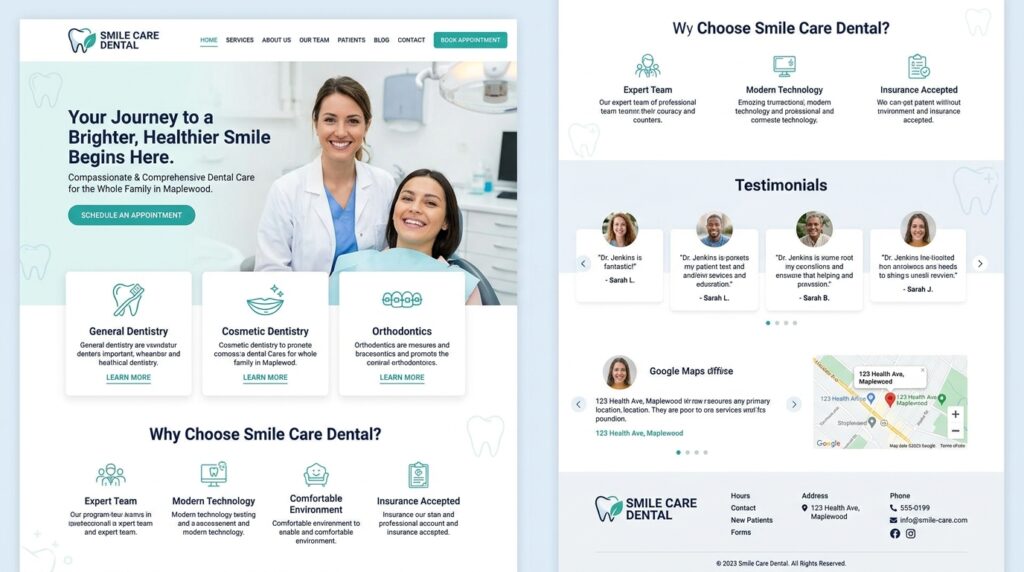
To understand what’s working, you have to understand what stopped working — and why.
For years, the standard formula for dental internet marketing went like this:
- Build a decent-looking website
- Sprinkle your city name on the homepage
- Get listed in a few directories
- Post generic blog content (“5 Tips for Healthier Gums”)
- Collect a handful of Google reviews
- Pay an agency $500/month to “manage your SEO”
And for a while, that actually kind of worked. The bar was low. Competition was light. Google was less sophisticated.
That era is over.
Google’s algorithm has gone through seismic changes. AI-generated content flooded the internet, forcing Google to get much better at identifying depth, genuine expertise, and real-world authority. The introduction of AI Overviews (those AI-generated summaries at the top of search results) has reshuffled which results get visibility. And local search — the bread and butter of dental seo internet marketing — has become one of the most competitive spaces on the entire internet, with established practices, DSO chains, and big-budget competitors all fighting for the same three spots in the Local Pack.
The practices losing ground right now almost all share the same problem: they’re executing a 2019 strategy in a 2026 search landscape.
The 2026 Dental Internet Marketing Stack: What Actually Works
Think of modern dental SEO internet marketing as a five-layer system. Each layer builds on the one below it. Skip a layer and the whole thing underperforms. Nail all five and you’ve built something that compounds every single month.
Here’s the stack:
Layer 1: Technical Foundation (The Invisible Engine)
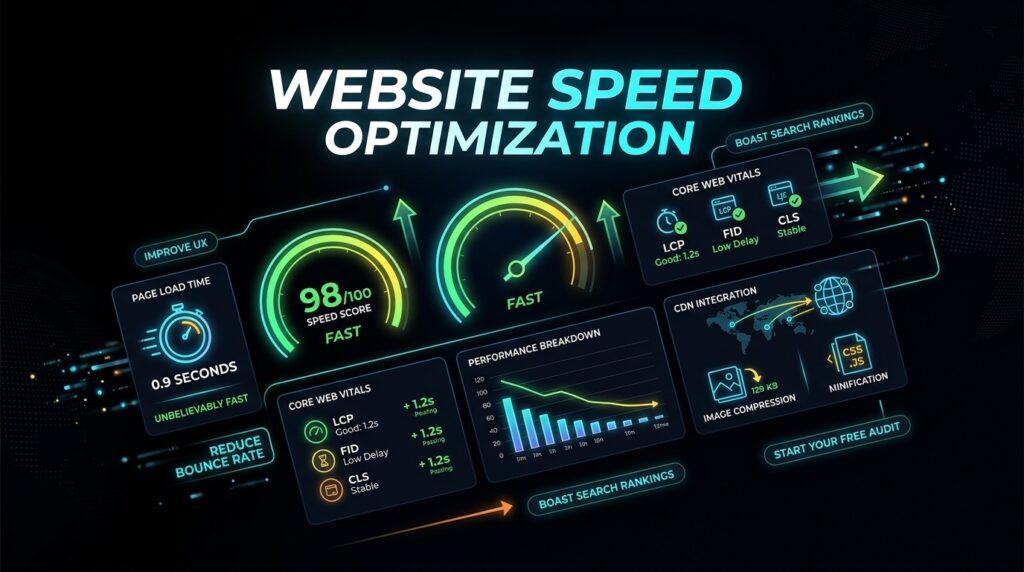
Nobody talks about this enough because it’s not sexy. But it’s the reason some dental websites rank and others don’t, despite doing all the “right” things on the surface.
Technical SEO is everything your website does behind the scenes that Google uses to decide whether your site is worth ranking:
Page Speed — Google’s Core Web Vitals are now a confirmed ranking factor. If your dental website takes more than 3 seconds to load on mobile, you are being penalized silently. Period. Most dental websites built on bloated themes with 47 plugins load in 6–8 seconds. That’s a disaster.
Mobile Optimization — Over 72% of local searches in 2026 happen on mobile devices. If your booking button is hard to tap, if your text is too small, if forms don’t work on an iPhone — you are losing patients before they’ve even considered calling you.
Core Web Vitals — These measure real-world user experience: how fast content loads (LCP), how stable the page is as it loads (CLS), and how quickly it responds to interaction (INP). A competent dentist seo expert will run your site through Google Search Console and fix what’s failing.
Schema Markup — This is code you add to your website that helps Google understand exactly what your practice is, where you’re located, what services you offer, and what your hours are. It can also unlock rich results like star ratings directly in search. Most dental websites have zero schema. That’s a free ranking advantage sitting on the table unclaimed.
Crawlability — Can Google actually read and index every important page on your site? Broken links, incorrect robots.txt settings, and pages accidentally marked “no-index” can silently bury your site. A site audit finds these instantly.
Fix the foundation first. Everything else you build on top of it performs better when the base is solid.
Layer 2: Google Business Profile — Your Most Valuable Piece of Digital Real Estate
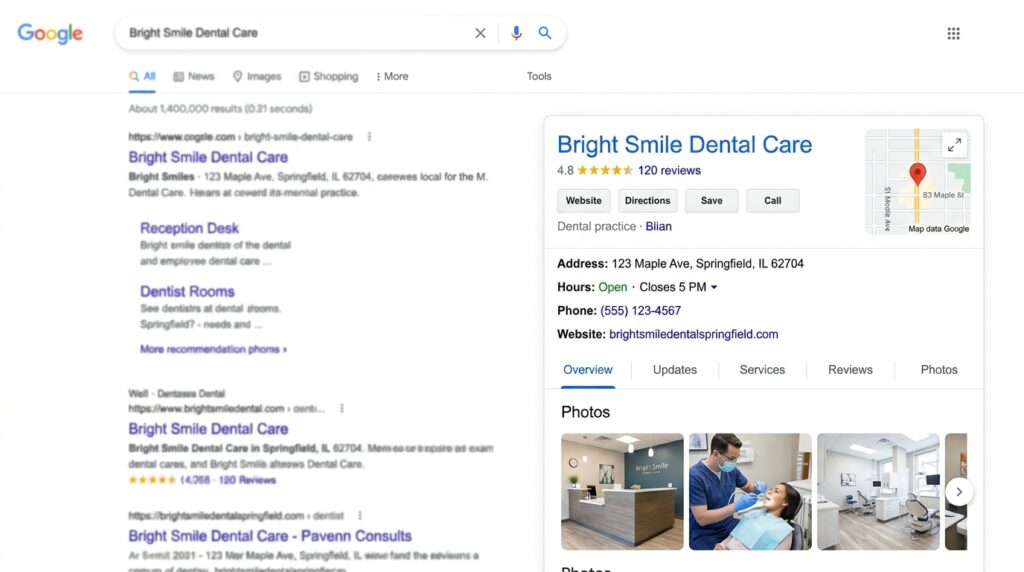
If you only did ONE thing for your dental seo internet marketing, it should be obsessively optimizing and maintaining your Google Business Profile (GBP).
Here’s why: when someone searches “dentist near me” or “dental implants in [city],” the very first thing they see is the Local Pack — a map with three practice listings. That’s it. Three spots. Everything below that — including organic website results — gets a fraction of the clicks.
The practices in those three spots didn’t get there by accident. They earned it through a consistently maintained, fully optimized GBP.
What a well-optimized GBP looks like:
Categories — Your primary category should be “Dentist.” Add secondary categories for every specialty you offer: “Cosmetic Dentist,” “Orthodontist,” “Teeth Whitening Service,” etc. Most practices only have one category and leave massive ranking opportunity behind.
Services — Every single service you provide should be listed with a description. Invisalign, veneers, dental implants, root canals, pediatric dentistry — each one is a keyword opportunity.
Photos — Google’s own data shows that profiles with more photos get significantly more direction requests and website clicks. You need exterior shots, interior shots, team photos, equipment photos, and ideally before/after treatment photos (with patient consent). Update these regularly.
Google Posts — Weekly posts about offers, new services, patient education, or practice news. These signal to Google that your profile is active. An inactive GBP is a slowly dying GBP.
Q&A Section — Most practices ignore this entirely. Big mistake. Seed it with the questions your patients actually ask (“Do you accept Delta Dental?” “Do you offer same-day appointments?”) and answer them yourself. This content can appear directly in search results.
Review Management — Respond to every review. Every single one. Thank the positive ones, professionally address the negative ones. This shows Google (and humans) that you’re engaged and trustworthy. The volume, recency, and sentiment of your reviews is one of the heaviest Local Pack ranking signals that exists.
The best dental local seo marketing agency relationships I’ve seen all start with GBP. Get this right and you’ll often see Local Pack improvements within 60–90 days.
Layer 3: On-Page SEO — Making Your Website Actually Say Something
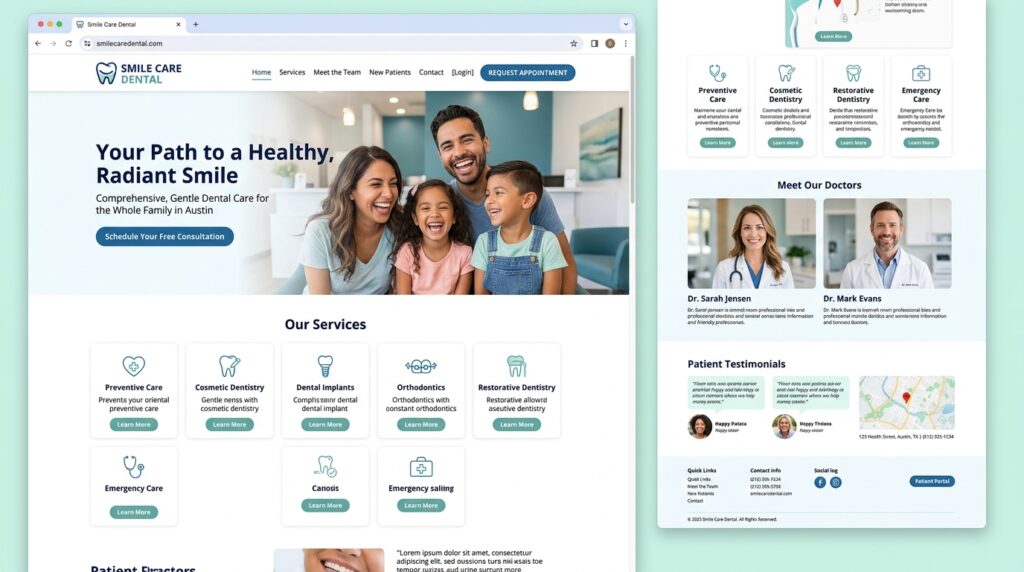
Your website has one job: to convince a potential patient (and Google) that you are the best dentist for them in your area.
Most dental websites fail this job spectacularly.
They have a homepage that talks about “comprehensive dental care” in the vaguest possible terms. One generic “Services” page that lists everything in bullet points. An “About” page with stock photos of people smiling. And a blog with four posts from 2021.
Here’s what a properly optimized dental website looks like instead:
Dedicated Service Pages — Every major service gets its own page. Not a bullet point on a combined services page — its own URL, its own optimized content, its own keyword target. “Dental Implants [City],” “Invisalign [City],” “Emergency Dentist [City]” — each one is a page that can rank independently.
Location Pages — If you serve multiple neighborhoods or nearby towns, each deserves its own page with locally relevant content. “Dentist in [Suburb A]” and “Dentist in [Suburb B]” target different searchers and can both rank.
Homepage Optimization — Your homepage should clearly state who you are, where you are, what you specialize in, and why you’re better — in the first 200 pixels of the page before anyone scrolls. It should have your phone number prominently visible, a clear call-to-action to book, and trust signals (years in practice, number of patients treated, awards, associations).
Title Tags and Meta Descriptions — Every page needs a unique, keyword-optimized title tag (what appears in the browser tab and in Google’s results) and a compelling meta description (the snippet under your link in search results). These are free real estate that most dental websites leave completely generic.
Header Structure (H1, H2, H3) — Each page should have one H1 with the primary keyword, followed by H2s that cover logical subtopics. This structure helps both readers and Google navigate your content.
The dental seo marketing experts company you work with should be able to show you exactly which keywords each page is targeting and why. If they can’t, the content is being created without strategy.
Layer 4: Content Marketing — Building the Authority That Rankings Require
Here’s the thing about Google’s 2026 algorithm that most dentist seo companies haven’t fully internalized: Google now ranks websites, not just pages.
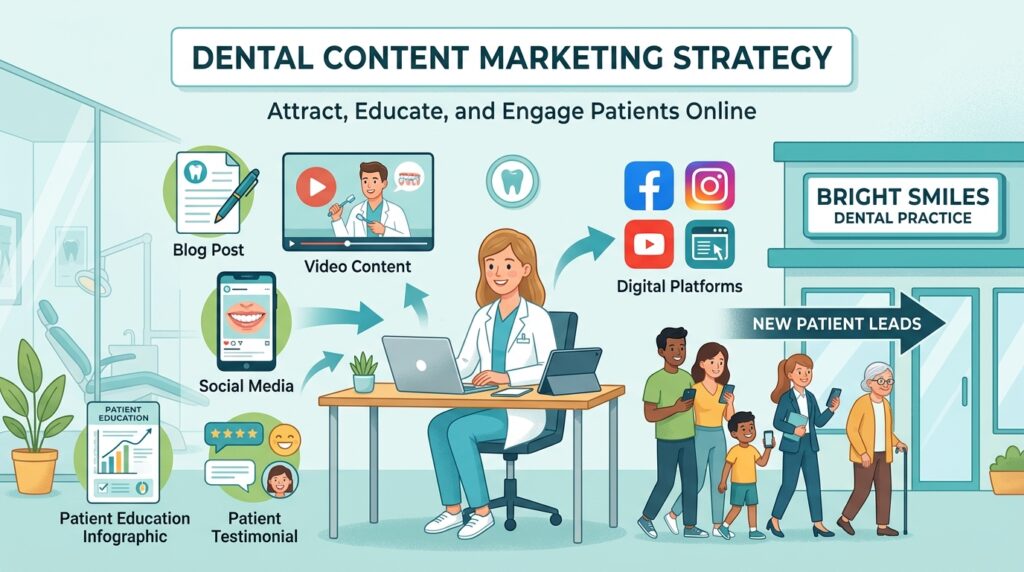
What that means is that if your website has thin content across the board — a few basic pages, a dead blog — Google assigns it lower authority even if individual pages are technically optimized. But a website that demonstrates deep expertise across a topic? That whole site gets a credibility boost.
This is why content marketing has become non-negotiable for dental seo internet marketing that actually delivers long-term results.
But — and this is critical — not all content is equal. The wrong content strategy can actually waste money and dilute your site’s focus.
What works:
Content targeting questions your actual patients are Googling before they book. “How long do dental implants last?” “Is Invisalign worth it for adults?” “What’s the difference between a crown and a veneer?” These informational searches build trust and bring in people who are 2–4 weeks away from booking.
Content targeting your local area specifically. “Best cosmetic dentist in [City] — what to look for.” “Why [City] residents are choosing clear aligners over traditional braces.” Localized content signals relevance to Google for your specific market.
What doesn’t work:
Generic health tips with no local angle and no connection to your services. Content that could appear on any dental website in the country is content that won’t rank for any of them.
AI-generated bulk content with no real expertise behind it. Google’s Helpful Content system now actively identifies and devalues this. A real dentist seo expert will produce content that demonstrates actual dental knowledge and genuine patient value.
A solid content strategy produces 2–4 well-researched, genuinely useful pieces per month. Done consistently for 12 months, this builds a content moat that competitors can’t easily replicate.
Layer 5: Local Authority Building — The Signal Multiplier
All the on-page work in the world has a ceiling if nobody on the internet is talking about your practice. Local authority building is what breaks through that ceiling.
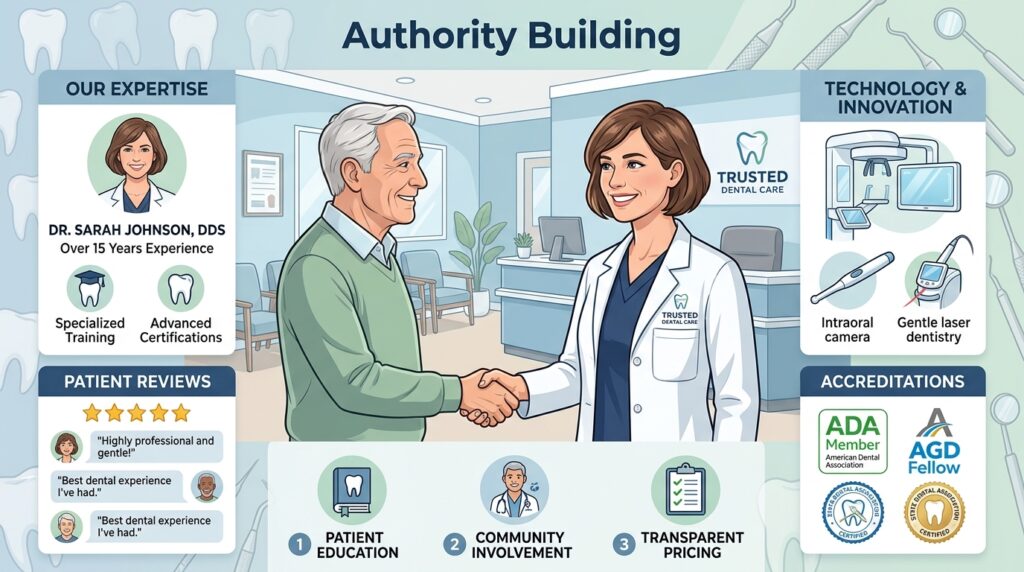
Link Building — Backlinks (other websites linking to yours) remain one of Google’s top ranking signals. For local dental practices, this means: dental association memberships, local chamber of commerce listings, sponsorship of local events (with a link from their website), local press coverage, guest content on community health websites, and listings in high-authority dental directories. A skilled dental local seo marketing agency builds these systematically, not randomly.
Citation Consistency — Your practice name, address, and phone number (NAP) needs to be exactly the same everywhere it appears online. Healthgrades, Zocdoc, WebMD’s directory, Yelp, Apple Maps, Bing Places, Yellow Pages, and dozens of others. Even a minor inconsistency (different phone number format, abbreviated vs. spelled-out street name) creates conflicting signals that suppress your Local Pack ranking.
Review Velocity — It’s not just about having reviews. It’s about getting them consistently. A practice that earned 200 reviews 3 years ago and has gotten 5 since then looks stale to Google. Ongoing review generation — systematic, ethical, consistent — is a ranking signal in itself.
Social Signals — Not a primary ranking factor, but an indirect one. An active Facebook page, Instagram profile showing real patient results (with consent), and community engagement all contribute to the overall online presence that makes your practice look like a thriving, legitimate local business to Google’s algorithm.
The AI Search Disruption: What Dental Internet Marketing Looks Like When Google Goes AI
Here’s something most articles on dental SEO internet marketing aren’t talking about yet but absolutely should be: the rise of AI Overviews in Google search is changing the game.
AI Overviews are those AI-generated answer boxes that now appear at the very top of many Google searches. They summarize information from multiple sources and often reduce the need for a user to click any link at all.
For dental practices, this creates a split reality:
Informational searches (“how long do dental implants last,” “is teeth whitening safe”) are increasingly answered by AI Overview without the user clicking through. Traffic to blog posts and educational content may decline for these queries.
Commercial and local intent searches (“dentist near me,” “dental implants in [city],” “emergency dentist open now”) are still heavily driven by the Local Pack and traditional results. AI isn’t replacing the map for local searches — not yet.
The strategic implication: double down on local commercial keywords and Local Pack optimization. Make sure your website is being cited by AI Overviews by having high-authority, well-structured content that answers common dental questions — because appearing in AI Overviews, even without a click, is a brand visibility win.
The dental seo marketing experts company conversations worth having in 2026 include this topic. If an agency is still operating like it’s 2022 and hasn’t adapted their content strategy for AI search, that’s a gap.
Why “Dental Internet Marketing” Isn’t a One-Size-Fits-All Game
One thing I want to be clear about because it gets glossed over constantly: the right dental seo internet marketing strategy for your practice depends heavily on your specific situation.
A solo dentist in a mid-sized city competing against 12 other practices has different needs and different opportunities than a multi-location cosmetic dental group competing against DSOs in a major metro.
Variables that should shape your strategy:
Your market’s competitiveness — How strong are the top-ranking competitors? What’s their review count, their domain authority, their content depth? This determines how aggressive and resource-intensive your campaign needs to be.
Your specialty mix — A practice focused on cosmetic dentistry (high-value services, high search intent) should prioritize different keywords and content than a general family practice. A dentist seo expert who treats both identically isn’t thinking strategically.
Your current baseline — A practice starting from scratch (new website, no reviews, no GBP presence) needs a very different first 6 months than a practice with 150 reviews and decent rankings that just need a boost.
Your goals — Do you want more new patient volume across the board? Or are you specifically trying to attract implant cases? Invisalign patients? Pediatric families? The keyword targets and content strategy shift significantly based on the answer.
Cookie-cutter packages from dentist seo companies that apply the same playbook to every client regardless of these variables are how you end up 12 months in with a lot of activity but not a lot of new patients.
How Leads Swiped Approaches Dental Internet Marketing Differently
We built Leads Swiped around one core conviction: local service businesses deserve marketing that’s measured in leads, not likes.
For dental practices specifically, that means:
Every strategy starts with a deep-dive audit of your current presence — website health, GBP status, competitor landscape, current keyword rankings, review profile, citation consistency. No assumptions. No templates applied before understanding your situation.
Reporting is built around patient acquisition metrics. Calls tracked. Form fills tracked. GBP actions tracked. We connect the SEO activity to the outcomes your front desk actually cares about.
Content is created by writers who understand dental terminology, patient psychology, and local search — not outsourced to generic content farms.
We work as your dental local seo marketing agency partner, not a vendor who disappears after the sale.
If you want to see what this looks like in practice, check out our dental SEO services page — or read our guides on what a dental SEO expert actually does and how to find the best SEO company for dentists.
❓ Frequently Asked Questions
What is dental SEO internet marketing, exactly?
Dental SEO internet marketing combines website optimization, Google Business Profile management, local citations, content marketing, backlinks, and review generation to help practices get found by local patients on Google.
Done correctly, it creates a predictable flow of new patient inquiries from people already searching for dental services nearby.
How is dental internet marketing different from general digital marketing?
Dental marketing operates under healthcare trust standards and requires deep local SEO expertise.
It’s less about broad branding and more about capturing patients actively searching for treatment in your area right now.
What’s the most important part of dental SEO internet marketing right now?
Google Business Profile optimization and Local Pack rankings still generate the highest ROI for most dental practices.
That’s where the majority of high-intent local searches — and patient calls — originate.
How many blog posts do I need for dental SEO to work?
Quality beats quantity every time.
Two highly useful, locally relevant articles per month will outperform a flood of generic “dental tips” content.
The goal is topical authority — not content spam.
How do I know if my dental internet marketing is actually working?
Track organic calls, form submissions, Google Business Profile interactions, and rankings for high-intent keywords.
If those metrics aren’t improving within 4–6 months, it’s time to ask tougher questions.
Should small dental practices invest in SEO or just run Google Ads?
Ideally both — but SEO is the stronger long-term asset.
Google Ads stop working the moment spend stops. SEO compounds over time and continues producing results.
For smaller practices, starting with Local Pack optimization and expanding into full SEO is often the smartest path.
The Bottom Line
The practices dominating local search in 2026 didn’t get there by luck or by throwing money at generic marketing campaigns. They got there because someone — a smart dentist seo expert, a focused dental local seo marketing agency, or a lead generation partner who actually understood dental internet marketing — built them a real system.
A five-layer system. Technical foundation. GBP dominance. On-page optimization. Strategic content. Local authority building. All working together. All measured against real patient outcomes.
That’s what dental SEO internet marketing looks like when it’s done right.
And if you’re ready to stop guessing and start building it for your practice — we’re here for that conversation.
👉 Book a free strategy call with Leads Swiped — we’ll map out exactly where your practice stands today and what it would take to get you into the Local Pack and keep you there.
Leads Swiped is a lead generation agency specializing in done-for-you patient pipelines for dental practices — through local SEO, Google Business Profile domination, and conversion-first internet marketing.