


Commercial Roofing Marketing: The Contractor’s Blueprint for Bigger Jobs, Better Clients, and a Pipeline That Never Runs Dry
Alright, straight talk: most roofing contractors are phenomenal at the actual work — walking rooftops, diagnosing membrane failures, closing jobs. Where they bleed money is commercial roofing marketing. Either they’re not doing it at all, or they’re throwing cash at ads with zero strategy and wondering why the calls aren’t coming in.
Here’s the uncomfortable truth. The best roofer in your city is rarely the busiest one. The busiest one is the one who figured out how to consistently get their name in front of property managers, facility directors, and commercial real estate owners before those people even need a roofer. That’s what this guide is about — building a commercial roofing marketing system that works even when you’re on a job site with your phone face-down.
We’re going to cover every channel that actually moves the needle. No fluff, no academic marketing theory. Just what works, in what order, and why — from commercial roofing lead generation fundamentals all the way to the tactics that compound over time.
Why Commercial Roofing Marketing Is a Completely Different Game Than Residential
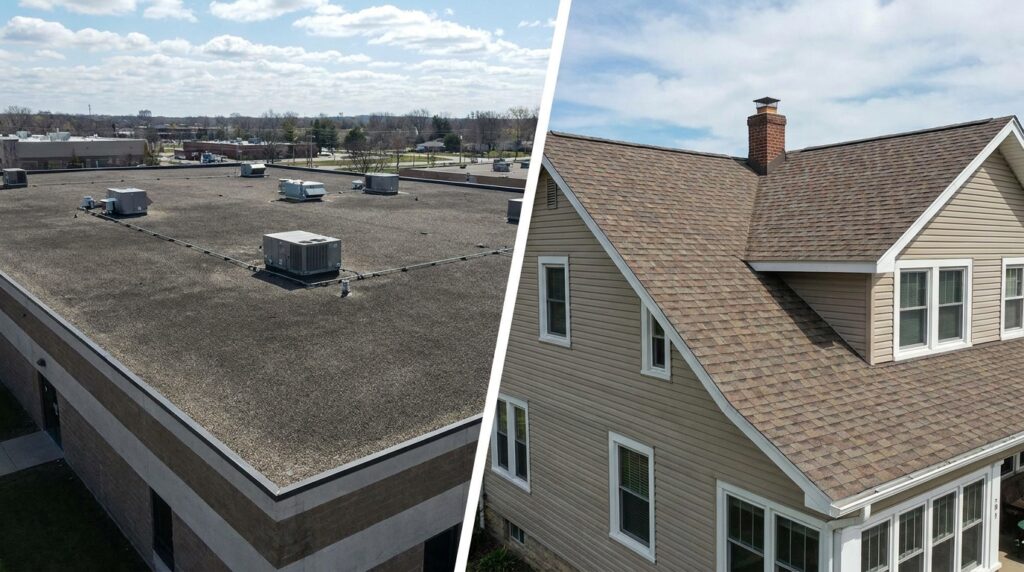
If you’ve been marketing to homeowners for years and just decided to go after commercial accounts — welcome to a different universe. The buyer, the timeline, the decision process, and the trust signals all change completely.
A homeowner sees a leak, panics, calls someone. Decision made in 20 minutes. A commercial property manager sees a bubbling membrane, documents it, runs it by maintenance, gets three quotes, takes it to the board, waits for budget approval, and calls you three months later. Your commercial roofing marketing has to account for that entire journey — not just the moment they’re ready to call.
What does that mean practically? It means you need to be visible and credible during the research phase, the comparison phase, and the decision phase. That’s three different touchpoints. One Google Ad won’t cut it. You need a system.
Contractors running residential-style Facebook ads (“Free roof inspection! Call today!”) for commercial clients.Facility managers are not scrolling Facebook looking for vendors. They’re on Google, LinkedIn, and trade publications.Meet them where they actually are — or watch your competitors take the deal.
The Foundation: Your Website and Local SEO for Commercial Roofing Marketing

Before any paid ads, before any outreach, your website needs to work. Not just look nice — actually work as a lead-generation machine. A property manager Googles “commercial roofing contractor [your city]” and lands on your homepage. What do they see? If it’s the same site you built for residential customers five years ago, you’re losing that lead in 8 seconds.
Build dedicated commercial service pages
Create a separate page for every core commercial service: flat roof replacement, TPO roofing, EPDM installation, commercial roof repair, preventive maintenance contracts. Each page should be 500+ words, focused on one service, written for the buyer who already knows what they need. These pages are the engine of your organic commercial roofing lead generation — they rank for specific searches and pull in pre-qualified traffic.
Dominate Google Business Profile for your service area
Your Google Business Profile is the most underestimated tool in commercial roofing marketing. Fill every single field. Primary category: Roofing Contractor. Add “Commercial” prominently in your business description. Upload photos of actual commercial jobs — flat roofs, large-scale installs, before-and-afters on warehouses and retail strips. Then get reviews that use the word “commercial.” That’s a direct ranking signal for local commercial searches.
Create location-plus-service pages for every city you serve
A page titled “Commercial Roof Replacement in [City]” with 600 real words will outrank your generic homepage every time. Build one for each combination of core service and city in your service area. Yes, it’s work. Yes, it’s worth it. This is the single most durable source of how to get commercial roofing leads without paying forever — organic pages that rank while you sleep.
Content Marketing: The Commercial Roofing Marketing Channel Most Contractors Ignore
“Content marketing” sounds like something a SaaS startup does. But here’s what it actually means for a commercial roofer: write the answers to the questions your prospects are already Googling. That’s it. No podcast. No video production. Just blog posts that show up when a facility manager searches “how long does a TPO roof last” or “commercial flat roof repair cost per square foot.”
These articles do two things simultaneously. First, they rank in Google and pull in traffic organically — feeding your commercial roofing lead generation pipeline without ad spend. Second, they establish you as the expert in the room before anyone has even spoken to you. When a property manager reads three of your articles and then gets a quote from you, you’re already their trusted advisor — not just another contractor.
📌 Content ideas that actually rank
“TPO vs EPDM roofing: which is better for large commercial buildings?” —
“Commercial flat roof inspection checklist” —
“How much does commercial roof replacement cost in [city]?” —
“Signs your commercial roof needs replacing before it leaks” —
“Preventive maintenance vs reactive repair: the real cost for commercial properties”
Paid Advertising That Actually Works for Commercial Roofing Lead Generation
Paid ads are not a strategy — they’re a faucet. Turn them on, leads flow. Turn them off, silence. But used correctly as part of a broader commercial roofing marketing plan, they give you traction while your organic content matures. Here’s how to not waste the budget.
Google Search Ads: target commercial intent keywords only
Don’t bid on “roofing contractor” — that’s broad and expensive. Bid on “commercial roof repair [city],” “flat roof replacement cost,” “TPO roofing contractor near me.” These are people with specific problems and budget authority. Set up call tracking (CallRail is great for this) so you know exactly which ads are generating real commercial roofing lead generation vs. just clicks from tire-kickers.
Retargeting: stay in front of people who already visited
Commercial decisions are slow. Someone visits your site in February, the budget gets approved in April. Without retargeting ads, you’re invisible during those two months. A simple retargeting campaign on Google Display Network keeps your brand in front of everyone who visited your site — for pennies per impression. This is one of the highest-ROI additions to any commercial roofing marketing budget.
Offline and Relationship-Based Strategies That Fill the Pipeline Fast
Here’s the thing about digital: it’s great, but it’s slow. Building organic rankings takes months. Content compounds over time. If you need how to get commercial roofing leads in the next 30 days while the digital engine builds up, offline relationship strategies are your fastest path.
Trade referral networks
Partner with HVAC contractors, electricians, and GCs who work the same commercial buildings. A $200 referral fee keeps your name top-of-mind on every rooftop they walk.
Commercial real estate associations
Join your local BOMA or commercial real estate networking group. Property managers pay to attend. Show up twice a month and you become the roofing expert they all know personally.
Targeted direct mail
A well-designed postcard to 300 commercial property management companies costs under $300 and has zero inbox competition. Most contractors abandoned direct mail — which means yours gets noticed.
Building permit monitoring
When a commercial building pulls a renovation permit, that’s often a signal a roof decision follows. County assessor data and services like BuildZoom list these publicly.
LinkedIn: The Most Underused Tool in Commercial Roofing Marketing
Every property manager, facility director, and commercial real estate owner you want to reach has a LinkedIn profile. And almost no roofing contractor is using LinkedIn as a marketing channel. That’s your window.
You don’t need to post every day or become an influencer. Here’s the simple playbook: connect with 10–15 property managers in your metro area every week. Share one before-and-after commercial project photo per week with a short caption about what the problem was and how you solved it. Comment genuinely on posts from commercial real estate groups. Within 90 days, your name is familiar to dozens of exactly the right decision-makers — and familiarity is the silent driver behind who gets called when the roof goes sideways.
Combine this with your content marketing and you have something powerful: people find your articles via Google, then see your name on LinkedIn, then get a postcard in the mail. That’s three touchpoints, and research consistently shows buying decisions in B2B contexts require 5–7 brand exposures before someone picks up the phone. Your commercial roofing marketing needs to be everywhere they look — not just one channel.
How to Measure Your Commercial Roofing Marketing So You Know What’s Working
You cannot improve what you don’t measure. Every contractor I’ve ever talked to who says “marketing doesn’t work” is the same contractor who can’t tell me where their last five commercial jobs came from. Track it or you’re flying blind.
- 1Set up Google Analytics 4 on your website — free, takes 20 minutes, shows you exactly which pages and search terms are driving visits and contact form fills.
- 2Use call tracking (CallRail has a $45/mo plan) — every marketing channel gets a unique phone number so you know which source generated each call.
- 3Track your Google Business Profile monthly — Google gives you free data on how many people called, clicked directions, and visited your website from your profile.
- 4Ask every new commercial lead “how did you hear about us?” and log it — simple, free, and often reveals your best channel faster than any analytics tool.
- 5Calculate cost per lead by channel, not just total spend — a $2,000 Google Ads spend that generates 20 calls at $100 each is radically different from one that generates 4 calls at $500 each.
The contractors who dominate commercial roofing marketing in their markets aren’t spending more — they’re measuring smarter and doubling down on what works. That’s the actual edge.
Your 60-Day Commercial Roofing Marketing Launch Plan
Stop waiting for the perfect moment. Here’s exactly what to execute, in order, over the next 60 days to get your commercial roofing lead generation engine running:
- Days 1–7:Fully optimize Google Business Profile. Upload 10+ commercial project photos. Request reviews from last 3 commercial clients, asking them to mention the building type specifically.
- Days 8–14:Build or update your commercial services section. Each major service gets its own page: 600+ words, real information, clear call to action, photos of actual work.
- Days 15–21:Write your first two content articles. Answer the two most common questions you get on commercial estimates. Publish them. Share on LinkedIn.
- Days 22–30:Launch a targeted Google Ads campaign for commercial roofing keywords in your service area. Set a daily budget of $20–$40 to start. Install call tracking before you spend a dollar.
- Days 31–45:Join one local commercial real estate or property management association. Attend the first meeting. Bring business cards that lead with commercial roofing, not residential.
- Days 46–60:Build referral agreements with two trade partners (HVAC, GC, or electrician). Send a direct mail piece to 200 commercial property management companies in your metro.
Sixty days of consistent execution. Most of your competitors won’t last two weeks on this list. That’s exactly why commercial roofing marketing is such a wide-open opportunity — the bar is low and the contracts are massive.
🧠 The mindset shift that changes everything
Stop thinking of commercial roofing marketing as an expense and start treating it like a hiring decision.
A well-built marketing system works 24/7, never calls in sick, never asks for a raise — and can generate $500K in contracts from a $15K annual investment.
No employee does that.
The bottom line: how to get commercial roofing leads consistently isn’t a secret. It’s a system — one that combines organic search, paid visibility, relationship-building, and smart measurement into a machine that produces every single month. The contractors winning the biggest commercial contracts in your market built that system. Now you have the blueprint. The only variable left is whether you execute.